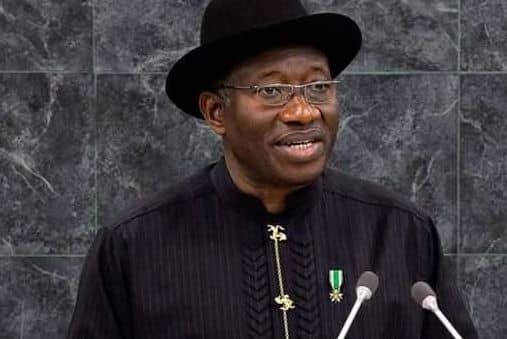
Former President Goodluck Jonathan made a powerful statement this week regarding his personal philosophy on past political grievances, stressing that he holds no animosity toward anyone and that forgiveness and reconciliation are fundamental to achieving political stability, national unity, and developmental progress in Nigeria.
The former president shared these sentiments while speaking at a requiem mass held in Abuja on Wednesday evening to celebrate the life and legacy of the late Chief Audu Ogbeh.Reflecting on the character of the deceased statesman, Jonathan noted that Chief Ogbeh was an individual who never sought vengeance, consistently believing that bygones should be left in the past to ensure continuous progress.
Jonathan then drew a parallel, confirming that this was also his deeply held conviction. He provided a clear and compelling declaration of his approach to dealing with those who may have wronged him, “Chief Ogbeh was a man who did not seek revenge.
He believed the past should be left behind and that we must keep moving forward.” He further asserted, “In that sense, he was just like me. If you hurt me today, I will forgive you. I don’t carry grudges against anybody. I believe the past is past, and I move on,” emphasizing his absolute refusal to hold onto grudges.
The former President recalled that his friendly relationship with the late politician blossomed during his tenure as a deputy governor, a time when Ogbeh was serving as the National Chairman of the Peoples Democratic Party (PDP).
Jonathan explained that, despite the fact that deputy governors were often seen as mere appendages, Ogbeh treated him with great respect and kindness, fostering a close friendship.
He elaborated on the treatment he received from the late leader saying,“I didn’t know Chief Ogbeh until I became a deputy governor when he was serving as National Chairman of the PDP.
At that time, deputy governors were often seen as spare tyres, but he treated me as a close friend. Whenever I visited Abuja, I would go to see him, and we always had good conversations. He was such a kind and generous person.”Their cordial bond, Jonathan highlighted, was not temporary but persisted even after he assumed the Presidency.
He noted that Ogbeh maintained easy access to him during his time as the nation’s leader. He confirmed that the two would often engage in extensive discussions about national affairs, stating, “Whenever he wanted to see me, he would come, and sometimes, we would spend up to an hour discussing national issues.”
Finally, Jonathan used the opportunity to urge Nigerian politicians to adopt the core values displayed by Chief Ogbeh throughout his life. He called on them to embrace humility, forgiveness, and the ability to effectively unite various segments of society, stressing that these virtues are essential for the overall progress and advancement of the nation.