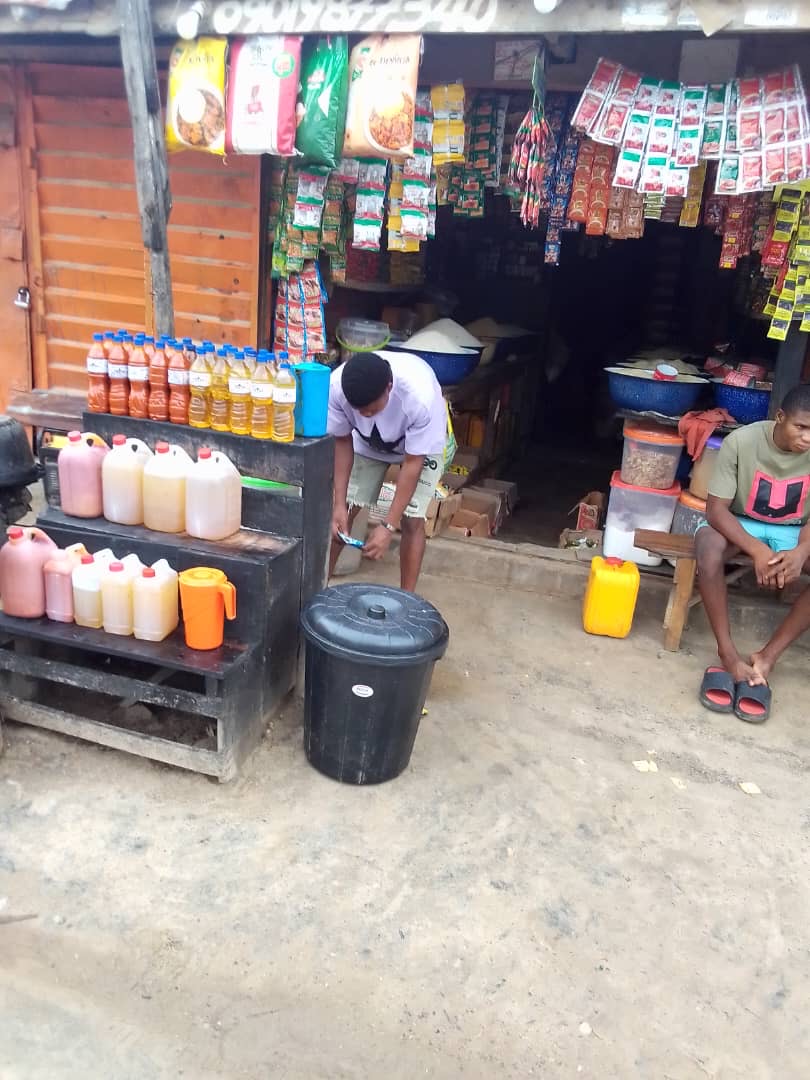
At 4:30 a.m., Macaulay Bus Stop in Ikorodu is already awake. Traders call out to early buyers, the noise of passing buses fills the air, and the smell of fresh produce mixes with exhaust fumes.
Women sit behind baskets of tomatoes and peppers, while men arrange yams, rice, and beans in neat rows.
But beneath the noise and movement lies a daily worry shared by traders and residents the cost of food remains high and unchanged, no matter how hard people try to adjust.
For months, while nearby markets in Ikorodu such as Sabo and Oreyo have seen slight drops in food prices, Macaulay Bus Stop has remained different.
Here, a paint of garri still sells for ₦2,500. A paint bucket of rice goes for between ₦6,000 and ₦7,500, depending on the type. A kilo of fish costs ₦3,800 and above, a tuber of yam goes for ₦5,000 upwards, and a single pack of Indomie noodles is ₦400.
“I have been selling foodstuff here for almost five years, and things are no longer like before,” said Iya Alaba, a trader near the bus stop. “Customers keep complaining, thinking we are the ones increasing prices.
“But we are also trying to make a small profit. Everything we buy from the market is already expensive, so we can’t sell at a loss.”
Traders say transportation costs and supply challenges are the main causes. Monday, a trader who sells provisions close to the bus stop, explained how expensive it has become to restock.
“The transport fare from here to main markets like Sabo or Ogolonto is high,” he said. “When I go to buy goods, drivers complain about my load and charge double or triple. If you don’t pay, they won’t carry you.”
Even buying from wholesalers, he said, comes with extra costs. “Suppliers charge for delivery, fuel, and bad roads. The unfinished road construction and unpredictable rain also make things worse. We can’t sell at old prices when we buy at higher rates.”
Residents are also feeling the pressure. Many now buy smaller quantities or choose cheaper alternatives. Mrs Folake, a mother of three who recently moved to Macaulay, said she was shocked at the prices. “I moved from Oreyo about five months ago, and everything here is high. You can’t find any shop selling food at a cheap price,” she said.
She shared her experience of buying okra. “Last week, I bought seven pieces of okra for ₦500. When I complained, the seller’s children said that’s how they sell it. I wasn’t happy at all. Now, I buy in bulk from Sabo or sometimes Oreyo where things are cheaper, even though I pay more for transport.”
For low income earners, the situation is even harder. Festus, a youth corps member serving in the area, said most of his allowance now goes to food.
“You can’t plan a budget anymore,” he said. “I lived and schooled in Delta where food was cheaper. Now, I rely on my mother who visits twice a month with food items to sustain me.”
Some residents believe traders are also part of the problem. Mrs Ngozi, a landlady in the area, said many of them avoid bigger markets where goods are cheaper.
“The high cost of food in Macaulay is alarming, and traders don’t seem to care,” she said. “They say going to Sabo is stressful, so they buy from Igbogbo instead, which is even more expensive.”
As the day winds down and buses pull away from the park, traders pack their goods and count their earnings. Yet, the story remains the same. Prices stay high, customers keep adjusting, and the market keeps moving.