
In Ogijo, a fast-growing town between Ikorodu Lagos and Ogun states, Point of Sale (POS) operators have become part of daily life.
With banks located far from many parts of the community and long queues at the few available branches, residents now rely on these small business owners for access to cash and basic financial services.
From umbrella-covered corners to roadside tables, POS stands have turned into mini-banking points for market women, commercial riders, traders, and students. But behind the familiar “cash or transfer?” greetings lies a business that demands patience, vigilance, and courage.
A visit to Ogijo by Timely Publishers revealed the daily routines and challenges of several operators whose stories reflect resilience in the face of limited opportunities.
For Abosede Adebayo, 26, her journey into the POS business began after her National Youth Service year.
“I thought I would get a job quickly after NYSC, but nothing came,” she said. “I didn’t want to sit at home, so I used my savings of N120,000 to buy a used POS machine and a table. It was a risk, but it worked.”
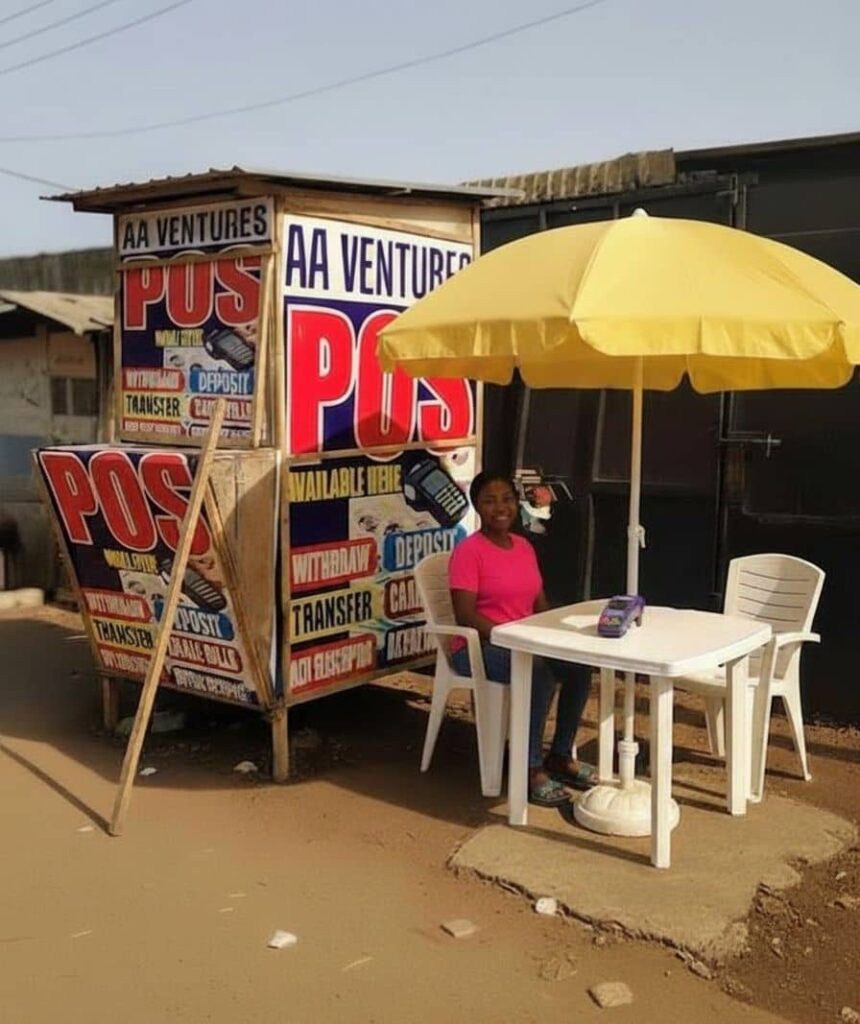
Abosede opens her stand at 7:30 a.m. and serves dozens of customers daily. She earns between N5,000 and N10,000 on good days.
“Network failure is my biggest problem,” she said. “Sometimes the alert doesn’t come early, but I’ve learnt to stay calm and keep records. I plan to open another outlet soon.”

For Sunday Edeh, 35, leaving his work as a mechanic was a decision born out of exhaustion and the need to provide for his family.
“I was barely surviving,” he recalled. “A church member introduced me to POS work. I got a cooperative loan of N200,000, bought my first machine, and started near the market.”
Sunday begins his day at 8 a.m. and closes around 7 p.m. “Someone once sent me a fake alert of N50,000,” he said. “I was devastated.
Since then, I double-check every transfer before paying out. It’s a stressful job, but it gives me dignity. I feed my family and pay my rent.”
For Afolabi Toyin, known as Mama Ireti, the business became her lifeline after she lost her husband in 2020.
“After his death, things were hard,” she said. “I used part of the condolence money to buy a second-hand POS machine. I started right in front of my compound.”
Every morning, she sets up her table by 8:30 a.m. and closes at night. “My customers are mostly women from nearby streets,” she said. “They trust me because I’ve been consistent.
Sometimes I fear robbers, but this work keeps me going and helps me care for my children.”
Temitope, popularly called Tope Dollar, 28, dropped out of the Polytechnic of Ibadan when his parents could no longer afford his tuition.
“I learnt the POS business from my cousin,” he said. “After saving N60,000, I bought my own machine.”
Temitope starts work at 7 a.m. and often closes around 9 p.m. On busy weekends, he handles more than 100 transactions. “Area boys disturb us sometimes, and the network can frustrate customers,” he said. “But I’m saving to return to school to study Business Administration.”
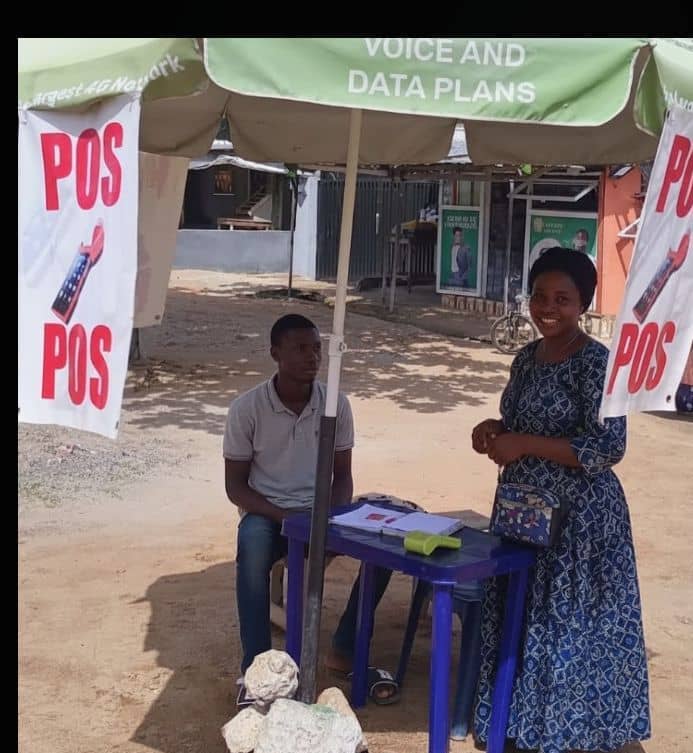
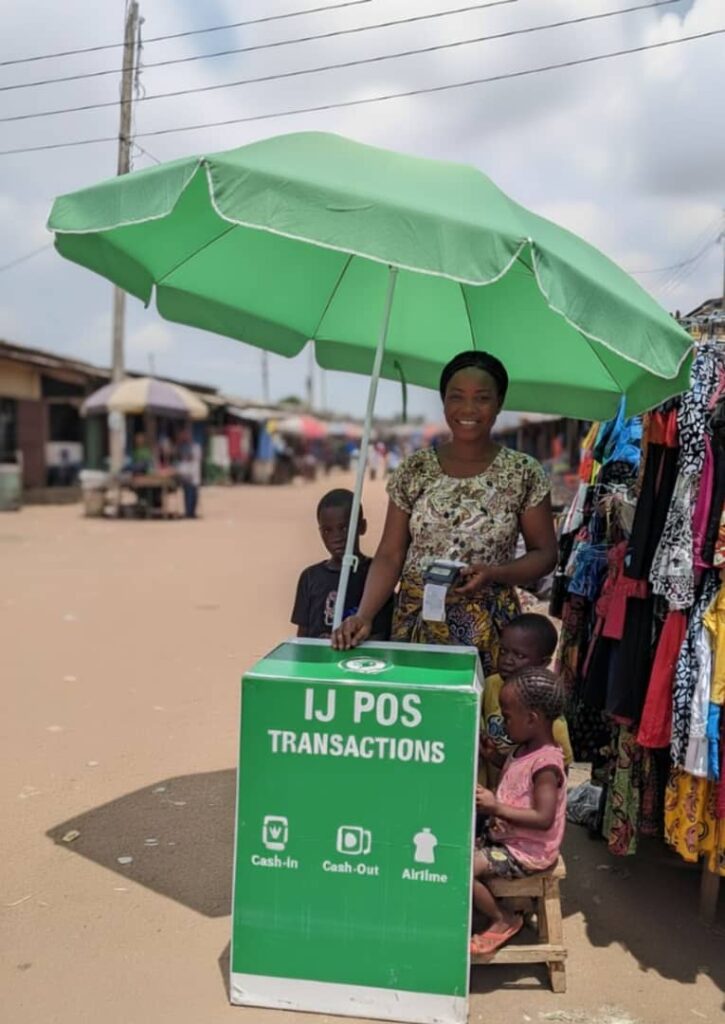
For Ijeoma Okeke, a single mother of two, the business was a way out of low income and dependence.
“I was earning N15,000 as a teacher. It was not enough,” she said. “I took a microloan from LAPO and started with one POS machine. Now, I have three.”
Ijeoma operates from 8 a.m. to 7 p.m., six days a week, and also sells second-hand clothes. “It’s not easy sitting under the sun or rain, but I can now feed my children and pay their school fees. My plan is to open a small shop and add phone accessories to my business,” she said.
Despite the pressure, insecurity, and unstable network connections, Ogijo’s POS agents continue to bridge the financial gap in their community.
They bring banking closer to homes and markets, helping residents send, receive, and withdraw money without travelling long distances.
As Nigeria moves deeper into a cashless economy, these operators remain crucial to daily transactions. Their small tables and umbrellas are more than just workspaces they are symbols of hard work, survival, and community trust.
In Ogijo, they are not just cash handlers; they are the quiet hands keeping the town’s financial heartbeat steady.