Inside the Creative World of MBS Fashion, Where Every Stitch Tells a Story
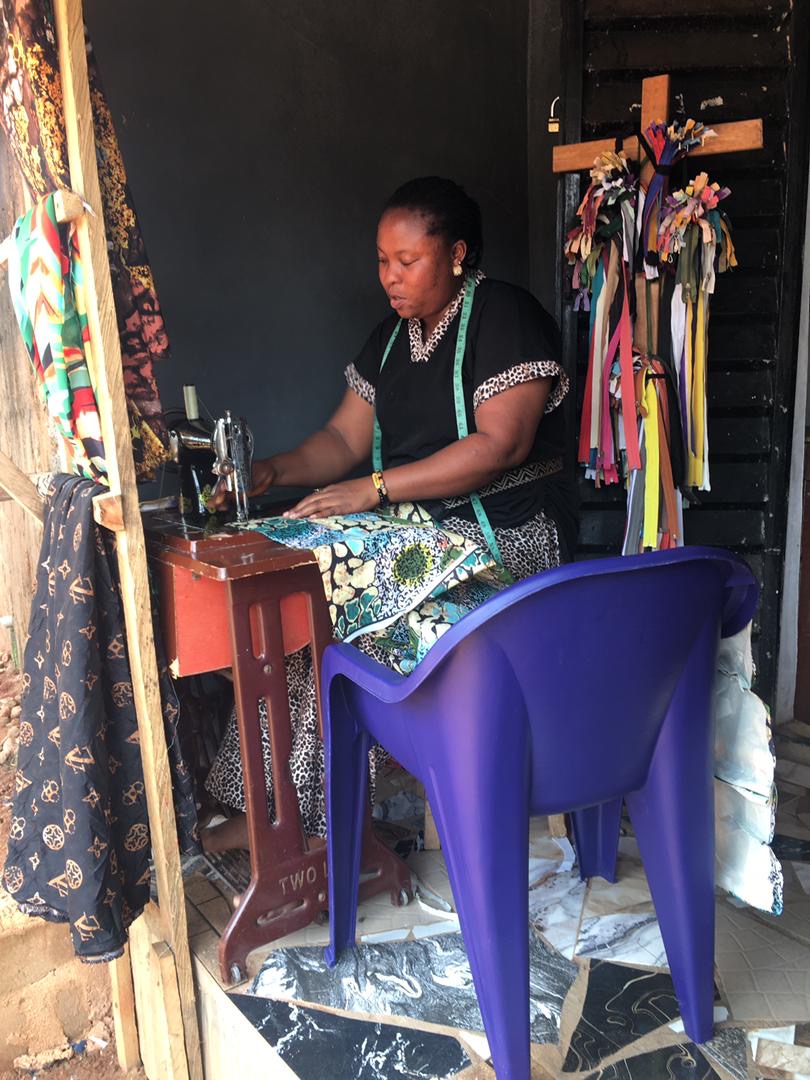
In the quiet but bustling community of Ogijo, Ogun State, the rhythmic hum of a sewing machine signals the start of another day for Oluwadamilola, a young fashion designer and owner of MBS Fashion.
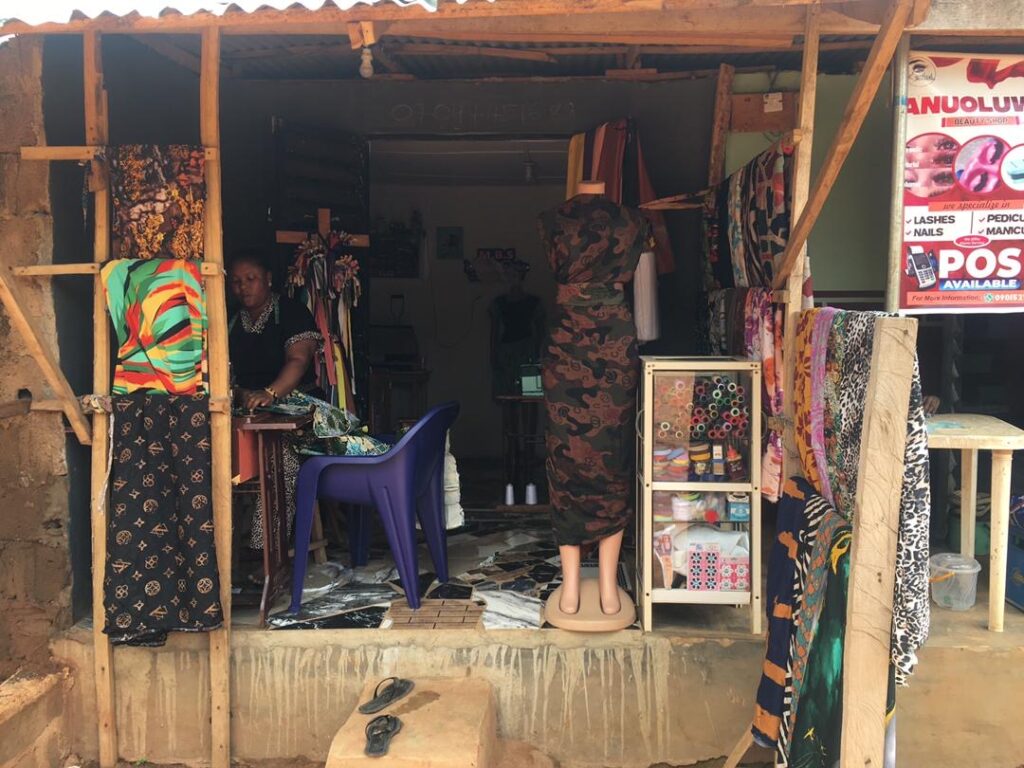
By 8 a.m. sharp, her modest shop—neatly tucked between a stationery store and a hair salon comes alive.
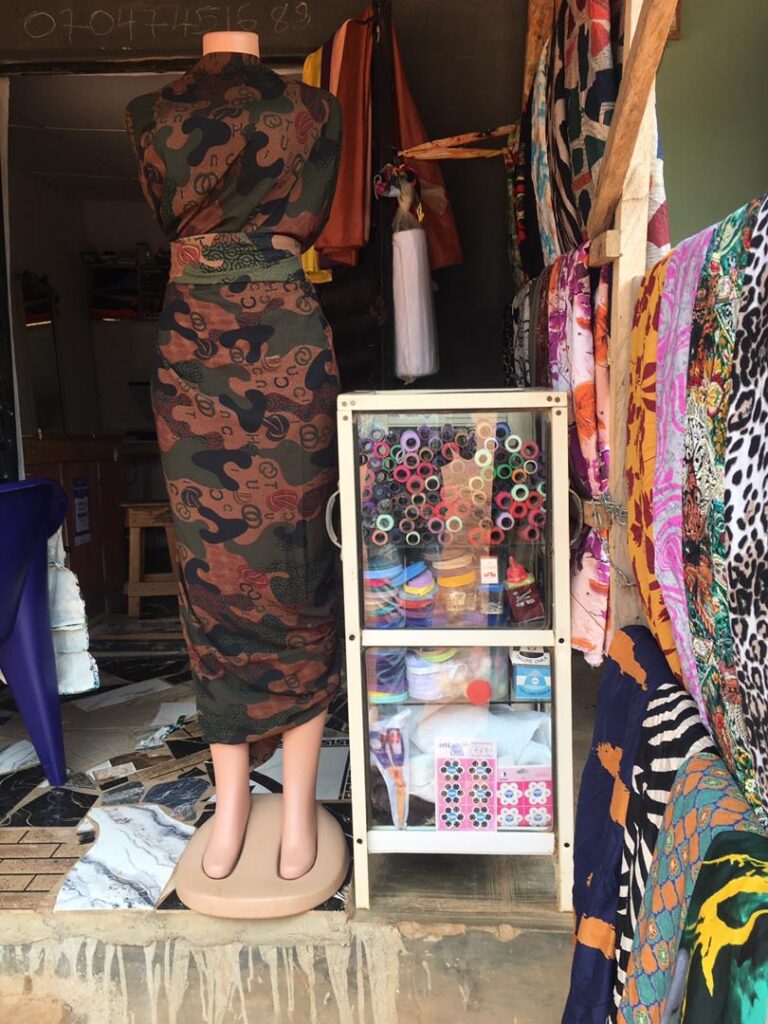
The small space doubles as both a tailoring workshop and a mini fabric store, lined with rolls of Ankara, satin, and lace.
Each morning, she begins with a prayer, a quick sweep, and then arranges her materials for the day ahead.
From morning until dusk, Oluwadamilola sews, measures, cuts, and attends to clients. It’s a cycle of creation and correction, driven by passion and the relentless pursuit of excellence.
Her story reflects not just the rise of a young entrepreneur but also the resilience that defines Nigeria’s growing fashion industry.
Oluwadamilola’s journey into fashion wasn’t part of any grand plan. It began, like many stories of self-discovery, from a setback.
In 2017, while studying at a university in Ijesha, Osun State, she faced what most students dread an extra year caused by one outstanding course. Instead of idling away, she decided to learn a new skill.
“I felt the year was wasting, so I just started fashion designing,” she recalled with a smile. “At first, I tried bag making, but I didn’t like how it came out. I wanted something neater, so I switched to sewing clothes.”
That switch changed everything. What began as a pastime soon became a passion. By the time she graduated, she had mastered basic tailoring and discovered her creative calling. After school, she moved to Lagos for further training and eventually set up her own fashion shop in Ogijo.
Every day for Oluwadamilola follows a rhythm as steady as the sewing machine that drives her work. She opens her shop at 8 a.m., arranges fabrics, and begins cutting patterns for the day’s jobs.
“I start by cleaning, then I shade what I sell tailoring materials and fabrics,” she explained, pointing at the neatly folded stacks on her shelves.
Her shop, though small, tells a story of ambition. Half of the space is dedicated to tailoring where unfinished dresses hang from nails on the wall while the other half is a mini boutique of fabrics waiting to become something beautiful.
Depending on the complexity of the design, she completes three to four outfits daily. Some styles, however, take up to two days to finish. Working alone means every taskcutting, stitching, ironing, and packaging is hers to handle.
“Sometimes it’s difficult to complete all the work,” she admitted. “I really wish to have apprentices.”
To an outsider, tailoring may seem straightforward cut, sew, and deliver. But for Oluwadamilola, it’s a delicate art that demands patience and precision.
“The most difficult part of sewing is cutting,” she said, gently smoothing out a bright Ankara fabric on her table. “If a client wants an urgent job, they pay extra we call it express service.”
Not all requests come easy.
“Sometimes, clients bring styles that are difficult to decode. It can take me days to figure out how to sew them,” she laughed. “There are nights I wake up around midnight just to think about the design.”
And then, there’s the constant battle with electricity an obstacle every Nigerian artisan knows too well. “When there’s no light, it slows down everything,” she lamented. “I need to iron as I’m sewing, but without power, I either wait or use my small generator.”
Every designer has a moment of heartbreak, and for Oluwadamilola, that came the day a client’s outfit got burnt during ironing.
“The fabric was a vintage type, and my client wanted a two-piece. I was done sewing and just wanted to iron it but it got burnt,” she recalled, shaking her head. “I had to buy another fabric myself. When the client came, she noticed it was different, so I quickly explained that the first fabric had been damaged before it got to me.”
It was a painful but valuable lesson about responsibility and improvisation.
Clients, Costs, and Creativity
For every creative, customer relations are as important as skill and often just as challenging.
“Some customers come, pick a style, and when I tell them the price, they say, ‘Is it not just thread?’” she said, laughing. “They don’t understand how much work goes into it the cutting, the sewing, the finishing.”
Despite the occasional frustrations, Oluwadamilola focuses on quality. She follows trends on Instagram and Pinterest but tailors them to fit her customers’ personalities and local tastes.
“I enjoy sewing free styles,” she said, “but I don’t like corsets, especially here in my area.”
Her customers vary students, mothers, and young professionals from Ogijo and nearby Ikorodu. Most are regulars who appreciate her consistency and personal touch.
Ogijo: The New Frontier
Ogijo, a semi-urban community on the border between Lagos and Ogun States, is fast becoming a hub for small-scale entrepreneurs. From shoemakers to hair stylists, the town is buzzing with young people building businesses from scratch.
For Oluwadamilola, Ogijo offers both challenges and opportunities. While access to elite clients may be limited compared to Lagos, the environment is affordable and the clientele loyal.
Her shop is more than just a workplace it’s a social space. Customers stop by not only to fit their dresses but also to chat, discuss new styles, and share local gossip. On busy weekends, the air is filled with laughter, chatter, and the steady hum of her sewing machine.
Every Stitch Tells a Story
As the sun sets over Ogijo, the clatter of the sewing machine slows. Oluwadamilola carefully folds the last fabric of the day, satisfied with another set of neatly finished outfits.
Her journey from an uncertain university student to a self-made fashion designer is a reflection of the Nigerian entrepreneurial spirit ,a blend of resilience, creativity, and grit.
“I’m still growing,” she said with quiet pride. “Every day I learn something new. Sewing has taught me patience and perseverance. Every stitch tells a story.”
In a country where many wait for opportunities, Oluwadamilola has learned to create hers—one stitch at a time.