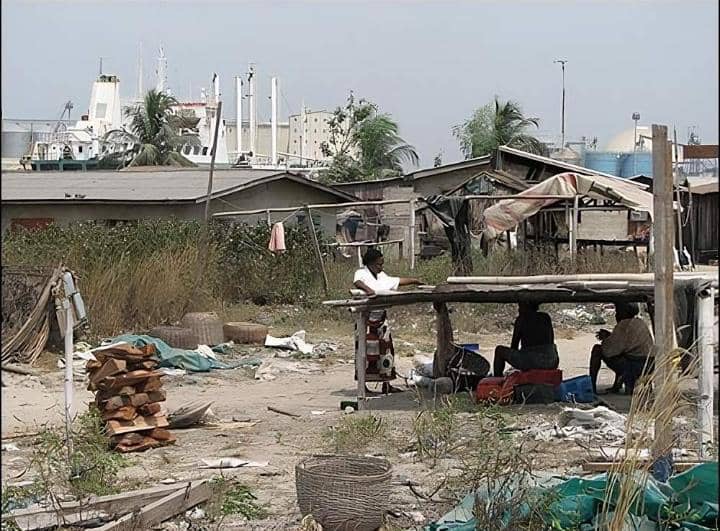
Ajegunle, one of Lagos’ most densely populated neighborhoods, is a community of contradictions.
On the one hand, it is home to hardworking Nigerians striving to make ends meet, while it remains plagued by insecurity, tout harassment, and police extortion that weigh heavily on residents’ daily lives.
In conversations with Timely Publishers, several residents shared personal stories that highlight the fragile balance between survival and hardship in this bustling community often described as the “jungle city” within Lagos.
“They Think I’m a Yahoo Boy”
For Mr. Olawale Akanni, a factory worker who has called Ajegunle home for 25 years, police harassment has become a routine ordeal.
His daily commute, he said, is rarely smooth.
“I usually go to work around 8 o’clock in the morning and come back around 9 at night.
Most times, policemen stop me because of the way I dress, thinking I am a yahoo boy. They harass me and expect me to give them money,” he lamented.
Akanni explained that his company, which produces wine and alcoholic drinks, does not provide identification cards for staff, a gap that worsens his encounters with security operatives. “This is very bad,” he said, “and I hope for a better change.”
Extortion on the Roads
Drivers in Ajegunle also carry their share of burdens. Mr. Emmanuel Akintunde, a driver who has lived in the community for 30 years, described the daily battle with transport union officials and touts who demand money at every stop.
“In Lagos State as a whole, they normally collect money from drivers. Some will allow us to pay later, while some insist on taking money by force. They should at least consider the money we need for fuel,” he explained. “This has been our way of life in Ajegunle.”
For drivers like Akintunde, the cost of transportation extends beyond fuel and repairs — it includes the constant deductions imposed by touts, a system he says has become normalized over time.
The Youth at Risk
The consequences of Ajegunle’s environment are perhaps most felt by the younger generation. Roqeeb Akinsola, popularly known as Quando, is a 16-year-old secondary school student who worries about the influences around him.
“Ajegunle is not a good place to train your child unless you are very cautious,” he said. “I have seen cult members influencing boys like me to join their groups.
Many of my mates have been killed for stupid reasons. It’s a bad orientation for upcoming adults like me.”
His words capture the silent struggle of many teenagers in Ajegunle who find themselves surrounded by crime and peer pressure, with survival often hinging on the choices they make too early in life.
Women in Fear
For women in the community, the threat of touts is an everyday reality. Mrs. Kudirat Olohunshogo, a foodstuff seller who has lived in Ajegunle for 25 years, spoke of the harassment and intimidation they face.
“These touts usually disturb the neighborhood, especially when they want to collect money. If they don’t get it, they can kill anybody. They also bully Hausa commercial motorcyclists who transport people,” she said. “I pray God helps us because they give us problems instead of peace.”
Her testimony echoes the fears of many market women whose livelihoods are often threatened by violence and intimidation.
A Lifetime in Ajegunle
Not everyone sees Ajegunle only through the lens of violence and fear. Mrs. Adeola Folami, a retired civil servant who has lived in the community for 57 years, admitted that tout-related fights have long been part of life in the neighborhood, but she also recalled moments of peace.
“My workplace was peaceful, but going home was always dangerous because touts fought each other for no reason, and lives were lost,” she said. “However, the police usually helped in settling these issues.”
Similarly, Mr. Akanni Mujab, another retired civil servant who once worked with the Federal Government Press, offered a more forgiving perspective.
“I purposely moved to Ajegunle because of my workplace headquarters located here. Touts are everywhere in Lagos, not just Ajegunle. They mostly affect transporters, not people like me. So, I see Ajegunle as a peaceful area,” he explained.
A Community of Contradictions
The voices of Ajegunle’s residents reveal a mixed reality. On one side lies a community burdened by systemic harassment, the menace of touts, and a cycle of insecurity that puts both livelihoods and lives at risk. On the other lies resilience the ability of its people to adapt, to endure, and to still find a sense of peace in the chaos.
Ajegunle remains a place of hope and hardship, a community where survival is both a daily struggle and a testament to the unyielding spirit of its people.