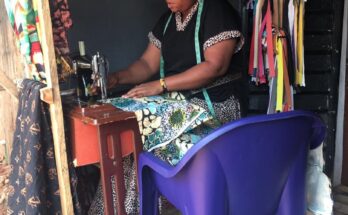
Across campuses in Nigeria, a growing number of students are redefining what it means to be in school.
Beyond lectures and assignments, many undergraduates are turning their skills into small businesses to support themselves, gain experience, and prepare for life after graduation.
From hairstyling to event planning and fashion, these student entrepreneurs are learning how to balance academics with enterprise, often working long hours to keep both sides afloat.
For some, like Ifeshile Ifetayo, the founder of Tayoslaystyle, the journey began with purpose.
“I started my business just recently ,” she said. “My goal is to make people look good.”
As a student entrepreneur, she manages both her business and studies with careful planning. “I prioritize my tasks, create a schedule, and make sure to take breaks,” she explained.
“While it’s challenging, I stay organized and focused on my goals for both my business and education.”
Her biggest challenge, she said, is managing the growth of her business while keeping up with her studies. Still, she remains optimistic
“At times, it can be overwhelming, but I believe in my vision,” she said. “Only start working if you’re truly passionate about it.”
Ifeshile plans to reduce her work hours as she approaches graduation, giving more attention to her final-year courses.
For Adeola, who runs Neemahairven, hairstyling is more than a business; it is a natural talent. “I started working in my 100 level because I was always happy to make people’s hair,” she said.
Balancing school and work, however, is not always easy. “It can be draining at times because it clashes with class and other projects,” she noted. “Some clients want appointments as early as 9 a.m., while I have class from 8 a.m.”
Late nights and physical stress are part of her routine, but quitting has never crossed her mind. “There’s always struggle in anything worth doing,” she said. “Anyone who wants to work while in school shouldn’t get discouraged.”
She plans to maintain the same balance that has kept her steady since her first year.
Another student entrepreneur, who runs Wealth Hair Studio, ventured into hairstyling just three months ago. For her, the motivation was independence. “I wanted to gain experience, become financially independent, and support myself without relying on others,” she said.
She balances her academics by setting priorities and sticking to a schedule.
“Sometimes it can be difficult to meet up with classwork, but I try to manage my time,” she explained.
Her biggest challenge is keeping up with time, but she remains committed. “I’d advise other students to plan well and stay disciplined,” she said.
Gini Chinelo Grace, owner of Chinny’s Beauty World, shared a slightly different experience. She did not work for anyone while in school but ran an online store where she sold products on weekends. “It wasn’t stressful because I managed deliveries outside my school hours,” she said.
Her only challenge was low sales at some point. “But I never thought of quitting,” she added. “My advice is to keep pushing no matter how hard it gets.”
For Yakubu Binta, founder of Benny’s Surprises, the entrepreneurial journey started long before university. “I began four years ago after finishing elementary school,” she said. “While learning computer and graphic design, I developed the idea of becoming an event planner and surprise vendor.”
Today, she manages her business from school with the help of her staff. “I take orders and give instructions while in school,” she explained. “Fifty percent of my attention goes to business, and the other fifty to academics.”
Balancing both has not been easy. “I have never thought of quitting school or work no matter the stress or challenges,” she said.
“Anyone who wants to start should be ready to sacrifice time and effort.”
Her plan after graduation is clear: “By God’s grace, I will open my own shop before going for national service.”
These stories reflect a growing reality among Nigerian students a generation that is no longer waiting for opportunities but creating them.