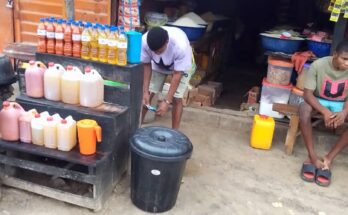
Private petroleum depots in Lagos and surrounding areas were largely inactive on Tuesday as the Dangote Petroleum Refinery commenced direct distribution of petrol to marketers, a move that has sent ripples through Nigeria’s downstream sector.
Investigations revealed that many depot operators suspended trading in anticipation of benefiting directly from the refinery’s new distribution model.
A source familiar with the development, who spoke on condition of anonymity, confirmed the situation.
“Dangote Refinery has started direct supplies to marketers, which is why operations at depots have slowed to a minimum,” the source said.
The Chief Executive Officer of Petroleumprice.ng, Mr. Olatide Jeremiah, described the refinery’s move as a game-changer that has disrupted the conventional supply chain.
“The sector is currently unsettled as Dangote, now the dominant player, is setting the pace,” Jeremiah said.
“On Monday alone, the rollout of 1,000 trucks caused tension among depot owners and retailers, leading to a sharp drop in purchases. For the first time, global oil prices are climbing while local depot prices are falling. This shows the strength of domestic market forces driven by the Dangote Refinery.”
Jeremiah added that the shift could lead to improved practices in the sector and ultimately result in fairer fuel prices for consumers.
Speaking during an event to mark one year since the refinery began producing petrol, the President and CEO of Dangote Group, Alhaji Aliko Dangote, said the facility has played a pivotal role in improving Nigeria’s energy security.
Dangote reflected on decades of recurring fuel scarcity and queues across the country, saying the refinery has begun addressing a problem that dates back nearly 50 years.
“Since 1975, Nigerians have struggled with fuel queues, but today, we are entering a new era,” Dangote said.
He admitted that building the $20 billion facility came with significant challenges, revealing that experts and government officials had initially advised against such an ambitious undertaking, typically handled by sovereign states.
“The decision to build the refinery was not easy. If the project had failed, lenders would have taken all our assets. But we believed in Nigeria and in Africa,” he said.
Dangote stressed that the refinery was not established to edge out other players but to end Africa’s dependence on imported petrol.
“Previously, only two African countries were self-sufficient in petrol production. Today, even those nations have resumed imports, which is a setback for the continent,” he explained.
With direct supply now in motion, analysts predict a fundamental shake-up in Nigeria’s downstream sector, potentially leading to a more stable fuel distribution system and a reduction in pump price volatility nationwide.